Best “A Little Horse” NYT Crossword Answer Variations Explained

Crossword clues are at their best when they look simple but quietly invite more than one reading. The clue “A little horse” in the New York Times crossword is a perfect example: it can point to an actual small equine, a young horse, a wordplay twist, or even a sound-based joke. If you have ever stared at this clue wondering whether the answer should be PONY, FOAL, COLT, FILLY, or something more mischievous, you are not alone.
TLDR: The most common answer to “A little horse” is often PONY, especially when the clue means a small type of horse. However, depending on the puzzle’s word count, crossings, and tone, answers like FOAL, COLT, FILLY, or even punny options related to “hoarse” may appear. The key is to decide whether the clue is asking for a small horse, a young horse, or a wordplay answer.
Why This Clue Is Trickier Than It Looks
At first glance, “A little horse” seems almost too easy. A little horse is a pony, right? Often, yes. But in crossword solving, especially in the NYT, the clue’s surface meaning is only the beginning. Constructors frequently use short, familiar phrases to create ambiguity. The word little can mean small in size, young, slight, or even a small amount of something. Meanwhile, horse can be literal, slangy, or a setup for a homophone like hoarse.
That is why this clue has several plausible answer variations. The “best” one depends on the number of letters in the answer, the crossing letters you already have, and the day of the week. Monday clues tend to be direct; Thursday and Sunday clues are more likely to hide a trick.

The Most Likely Answer: PONY
The classic answer for “A little horse” is PONY. It is short, common, and crossword-friendly. A pony is not simply a baby horse; it is generally a small horse breed or an equine below a certain height. In everyday speech, though, most people use pony to mean a small horse, which makes it a natural fit for the clue.
PONY is especially likely when the answer has four letters. If your grid shows four squares and the clue is straightforward, this should probably be your first guess. In an early-week NYT puzzle, PONY is about as clean and direct as it gets.
- Clue: “A little horse”
- Likely answer: PONY
- Best when: The puzzle is easy or the answer length is four letters
- Type of clue: Literal definition
One subtle point: a pony is not necessarily young. This matters because solvers sometimes confuse PONY with FOAL. If the clue emphasizes size, PONY wins. If it emphasizes age, another answer may be better.
FOAL: When “Little” Means Young
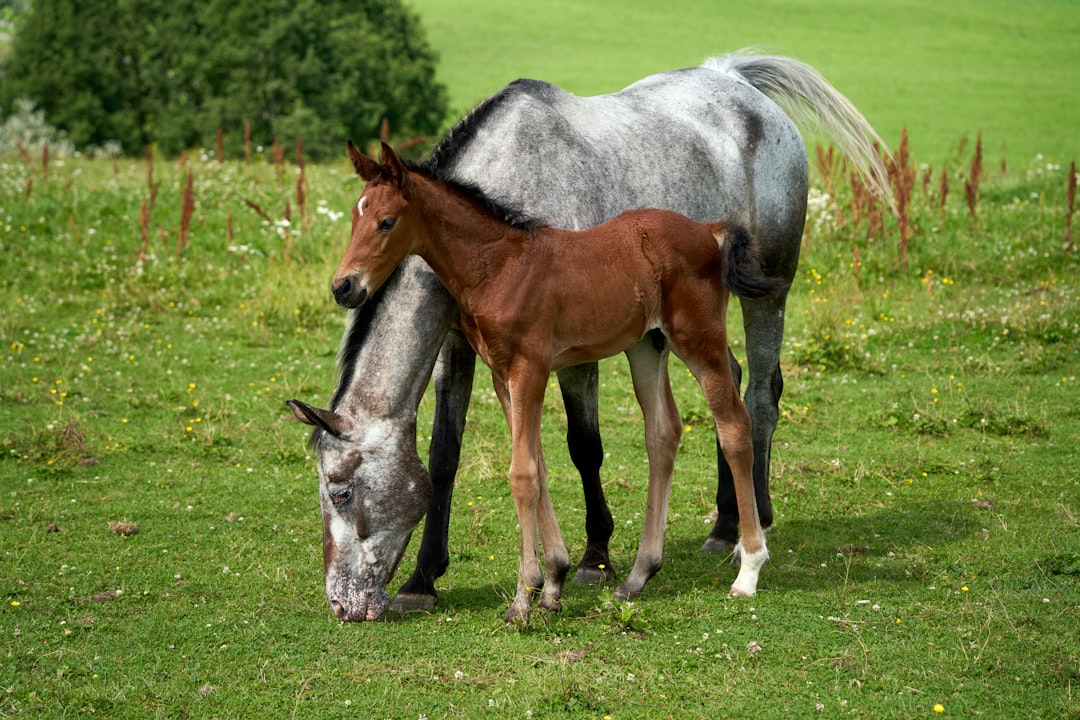
Another strong possibility is FOAL, which means a young horse, donkey, mule, or related animal. If the clue is interpreted as “a little horse” in the sense of a baby horse, then FOAL is the answer to watch for.
Like PONY, FOAL has four letters, making it a direct competitor in many grids. The difference is semantic. A pony is small; a foal is young. Crossword clues often rely on this overlap, because “little” can mean both. If you have crossings such as F, O, A, or L, the choice becomes obvious. Without crossings, consider the puzzle’s style. A very precise clue might use “young horse” for FOAL, while “small horse” usually suggests PONY. But “little horse” sits in the middle, inviting either.
In the NYT, a clue like “Baby horse” would almost always be FOAL. A clue like “Horse under 14.2 hands, say” would be PONY. The clue “A little horse” is more slippery because it borrows from both ideas.
COLT and FILLY: Gendered Young Horse Answers
If the answer length is not four letters, the clue may lead to a more specific young-horse term. Two important variations are COLT and FILLY.
- COLT: A young male horse, typically under four years old.
- FILLY: A young female horse, also usually under four years old.
COLT is four letters, so it can compete with PONY and FOAL. However, it is less likely unless the clue provides a gender hint, such as “young male horse” or “future stallion.” Still, crossword clues sometimes use broad definitions, and COLT may appear for a young horse in a looser puzzle.
FILLY has five letters, which makes it easier to identify from the grid. If the clue is “little horse” and you have five squares, FILLY could work only if the puzzle is using “little” to mean young and female. More often, the clue would say something like “young mare,” “young female horse,” or “Derby entrant, maybe.”
NAG, STEED, MARE, and Other Equine Possibilities
Not every horse-related answer is equally likely for “A little horse”, but it helps to know the surrounding vocabulary. Crosswords love compact horse words because they are short and full of useful letters. You may encounter:
- NAG: An old or worn-out horse; also a verb meaning to pester.
- MARE: An adult female horse.
- STEED: A riding horse, often poetic or old-fashioned.
- ROAN: A horse with a mixed coat color.
- ARAB: Short for Arabian horse, a breed often seen in crosswords.
For this specific clue, NAG is less likely unless the puzzle wants a slangy or humorous answer. MARE and STEED do not really mean “little horse,” though they may be tempting if enough crossings fit. In general, these are useful backup ideas, not primary answers.
The “Hoarse” Trick: When the Clue Is a Pun
Now for the fun part. NYT crossword clues often play with sound, and “A little horse” can be read as “a little hoarse”. That changes everything. Instead of asking for an animal, the clue might be asking for a voice quality.
If someone is “a little hoarse,” they might be RASPY, HUSKY, or ROUGHSOUNDING, depending on the answer length and the puzzle’s theme. A short answer could be RASP or HUSK if clued indirectly, though those are less natural as direct answers. The phrase could also lead to THROATY, FROGGY, or similar voice descriptors in a themed puzzle.
This kind of clue is more likely later in the week. A Monday puzzle probably will not expect you to hear horse as hoarse. A Thursday puzzle, however, might absolutely do that. If the clue appears with quotation marks, a question mark, or strange wording, be alert. A clue like “A little horse?” with a question mark would strongly suggest wordplay. Without the question mark, it may still be tricky, but the odds are lower.
How to Choose the Right Answer Quickly
When you see “A little horse”, do not commit too early unless you have crossings. Instead, run through a quick checklist:
- Check the answer length. Four letters makes PONY, FOAL, and COLT possible. Five letters may suggest FILLY or a punny voice word like RASPY.
- Look at the day of the week. Early-week puzzles favor literal answers. Late-week puzzles favor misdirection.
- Notice punctuation. A question mark often signals a joke, pun, or nonliteral reading.
- Ask what “little” means. Is it small, young, slight, or “somewhat”?
- Use crossings to settle it. If the first letter is P, choose PONY. If it is F and four letters, FOAL may be the winner.
This approach is better than memorizing one answer, because the NYT crossword rewards flexibility. The same clue can behave differently depending on the constructor’s goal.
Common Answer Variations at a Glance
| Answer | Letters | Meaning | When It Fits Best |
|---|---|---|---|
| PONY | 4 | Small horse | Most direct interpretation of “little horse” |
| FOAL | 4 | Baby or young horse | When “little” means young |
| COLT | 4 | Young male horse | When a masculine or racing context is implied |
| FILLY | 5 | Young female horse | When the clue points to a young female horse |
| RASPY | 5 | Slightly hoarse | When the clue is a homophone pun |

Why NYT Crossword Clues Use This Kind of Ambiguity
The NYT crossword has a long tradition of clues that are fair but layered. A clue like “A little horse” works because every possible answer has a logical path. PONY is fair because ponies are small horses. FOAL is fair because baby horses are little. A pun answer is fair if the puzzle uses a question mark or a theme that signals sound play.
This is what makes solving satisfying. You are not just retrieving a definition from memory; you are interpreting language. The clue is a tiny test of context. Is the constructor being literal, playful, technical, or conversational? The answer emerges when the crossings and the clue’s tone agree.
Best Final Guess
If you need the safest answer to “A little horse” with no other information, choose PONY. It is the cleanest and most common interpretation. If the grid has four letters and the clue appears in an easy puzzle, PONY is very likely correct.
However, keep FOAL close behind. If the crossings resist PONY, or if the clue seems to emphasize youth rather than size, switch to FOAL. For five letters, consider FILLY if the clue has a young-horse angle, or RASPY if the clue seems to be winking at “a little hoarse.”
Ultimately, the best solvers treat “A little horse” not as a single clue with one memorized answer, but as a small puzzle about meaning itself. That is the charm of the NYT crossword: even a tiny barnyard clue can open the stable door to vocabulary, wordplay, and a satisfying aha moment.